MEDIA RELEASE
FOR IMMEDIATE RELEASE
28 May 2026
SHARADENE FORTUIN’S COMEBACK STORY IS MORE THAN A TITLE, IT IS A STORY OF BELIEF
When Sharadene Fortuin stepped into the ring on 23 May 2026 to face Zambia’s Alice Mbewe, she carried far more than the ambition to win another fight.
She carried years of professional boxing experience, the pain of stalled opportunities, the weight of a career that had gone quiet, and the hope that this night would give her story a second breath.
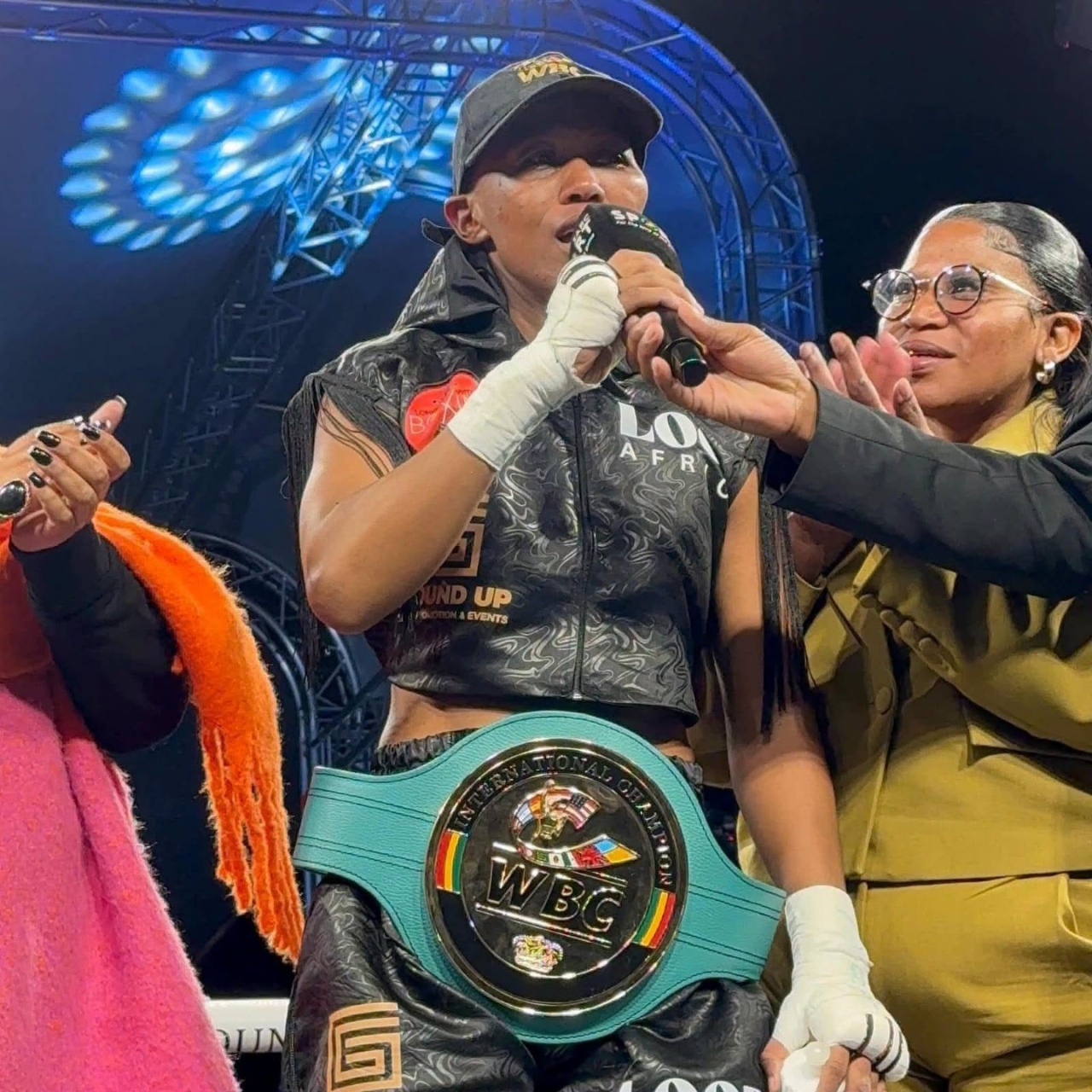
Fortuin went on to defeat Mbewe and capture the WBC International Female Bantamweight Title, making history as the first South African woman to win a WBC International title. But behind the belt is a story far deeper than boxing. It is a story about what happens when a fighter is almost forgotten, and someone comes back to find her.
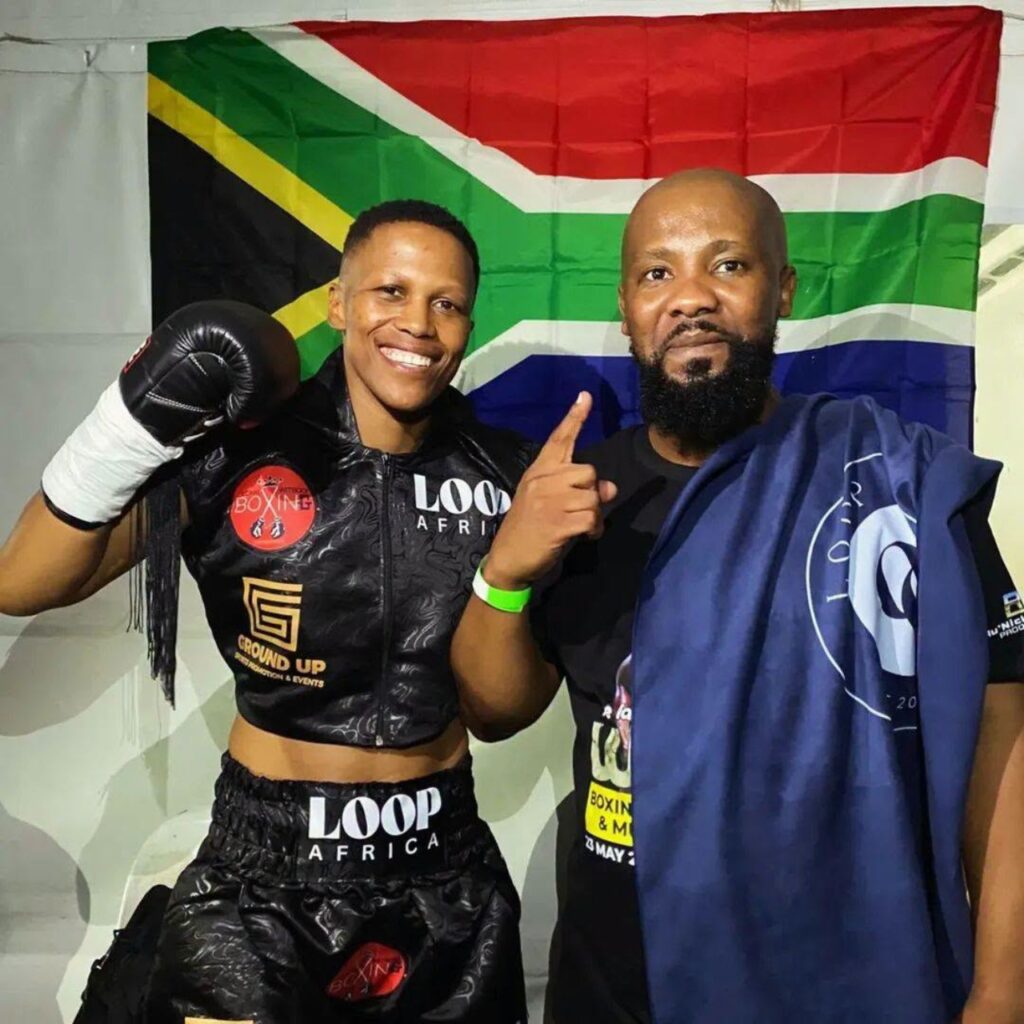
We know the story all too well in sport. When you are winning, there are many people cheering from the sidelines. But when the chips are down, when the lights fade and the opportunities slow, only a few people are willing to step closer. For Sharadene, that person was Lonwabo Witbooi, fondly known in boxing circles as Lonki.
Lonki positioned himself as her manager, and later as her trainer, giving him the ability to do what her career urgently needed, rebuild the structure around her and add runway to her career in professional boxing.
At 31 years old, Fortuin has spent most of her life in boxing. She first entered a boxing gym at the age of 10, inspired by her father and cousins who boxed before her. By 18, she had already turned professional. For nearly 14 years, professional boxing has been her life.
Yet, despite her talent and achievements, there were seasons where her career slowed down. She went through long periods of inactivity. She lost titles. She struggled for the kind of support and structure that any professional athlete needs to stay at the top. What many did not see was that Sharadene had never stopped loving boxing.
“I still wanted to box,” Fortuin explained. “But I didn’t have the right level of support around me.”
That distinction matters.
There is support, and then there is world-class support.
The support a fighter needs for a development bout is not the same as the support needed for a South African title. And the support required to prepare a boxer for the international stage is on another level entirely.
To compete for a WBC International title, a boxer needs more than access to a gym. She needs structure, management, accommodation, focus, nutrition, emotional stability, strategic matchmaking and a team that understands the demands of world-level boxing.
That is what Lonki brought into Fortuin’s life.
Long before this WBC International title victory, he had been watching her career closely. Where others may have seen a boxer whose best years were behind her, he still saw a champion. He saw skill, experience, intelligence and unfinished business.
“I reached out to her when I saw she was losing interest in boxing,” said Witbooi. “I asked her what her plans were because I knew there was still something special there.”
At the time, Fortuin was living in a rural area and her career had reached a difficult place. Lonki offered her more than words. He did not make empty promises. He offered structure, accommodation, training, support and a real plan. He brought her into his boxing family.
“Give me six months,” he told her. “Let’s see what we can do.”
That one decision changed everything.
Fortuin joined Witbooi’s camp in 2022 and, according to both boxer and manager, their relationship quickly became far more than a professional arrangement. “He made me part of his family,” Fortuin said. “Even when I had personal or family problems, he was always there for me.”
Witbooi speaks openly about his philosophy of management. “My style of management is to treat my boxers like my own children,” he said. “Boxing is not just about putting on gloves and getting into the ring. It’s about changing lives, shaping character and giving people opportunities they would never normally have.”
For Fortuin, that kind of support became the difference.
She knew she could still compete. She knew she still had the ability. But she also knew she could not do it alone. She needed a coach and manager who would walk every step of the road with her, from the training camp into the ring.
That became their secret sauce.
For eight weeks, before this fight, Fortuin went into camp in Beacon Bay. She trained twice a day, morning and afternoon. There were no distractions, no noise, no divided focus. Only the work.
“That was the best camp I’ve ever had in my life,” she said. “I was 100% focused, 100% supported.”
For a fighter at this stage of her career, the stakes were high. Had she lost, the future may have looked very different. This fight could have closed a chapter. Instead, it opened a new one.
Fortuin knew that. So did Lonki.
That is why the preparation had to be complete, mentally, physically and emotionally.
When she finally faced Mbewe, Fortuin did not only rely on fitness. She relied on experience. After almost 14 years in professional boxing, she has learned how to read a fight, stay composed and avoid being pulled into an opponent’s plan.
“She wanted to counter me with her right,” Fortuin explained. “She was trapping me, but I was too clever for her. I had prepared for anything that might happen in the ring that day.”
That ring intelligence became one of the defining features of her victory. Fortuin did not fight Mbewe’s fight. She fought her own.
And in doing so, she became South Africa’s first female WBC International Champion.
Her win in the female bantamweight division is not only a personal triumph, but another landmark moment for women’s professional boxing in South Africa. It proves that experience still matters. It proves that comebacks are possible. It proves that a boxer’s story is not over simply because the spotlight has moved away.
Most importantly, it proves what can happen when talent meets belief.
One boxer who refused to give up.
One manager who refused to let her disappear.
One team that became family.
As women’s boxing continues to grow in South Africa, Sharadene Fortuin’s journey is a powerful reminder that champions are not only made on fight night. They are made in the quiet months and weeks of preparation, in the discipline and unity of camp, in the courage to start again, and in the people who stand beside them when nobody else is watching.
Today, Sharadene Fortuin stands at the top once again. Not because the journey was easy. But because she still believed. And because someone else believed enough to walk every step with her.
“I want to tell upcoming professional female boxers they must not give up. If I can do it, they can do it too – don’t quit!”
End.